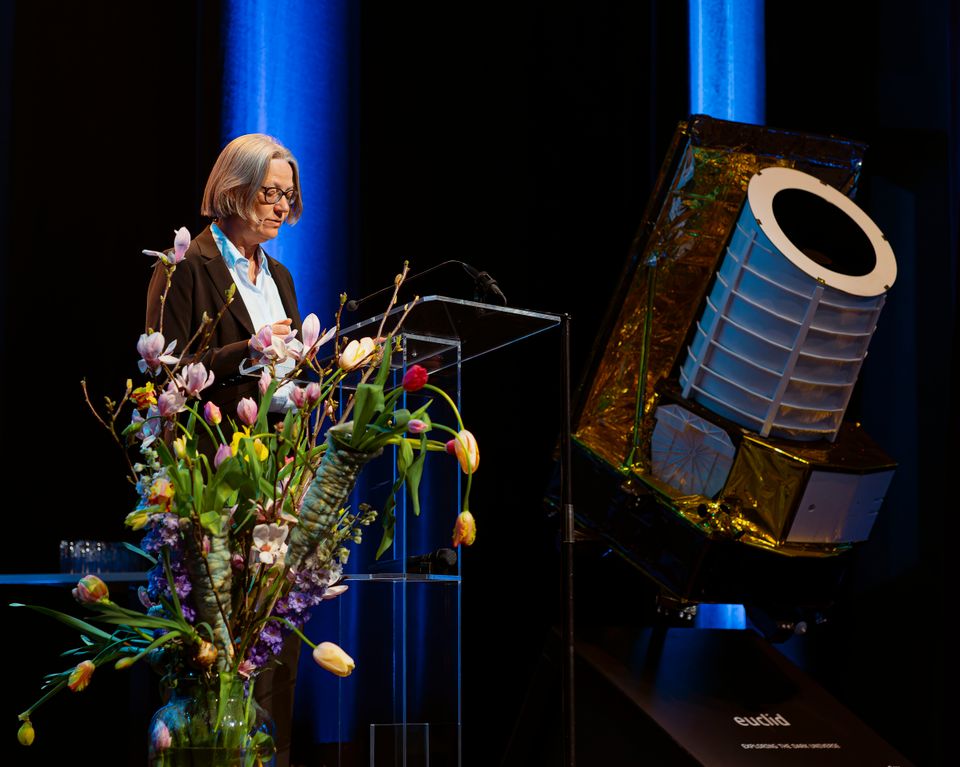
Researchers from Leiden Observatory have contributed to the discovery of 31 extremely distant quasars using the European Space Agency's Euclid space telescope. These bright galactic cores, powered by supermassive black holes, were already shining when the universe was only about five percent of its current age.
Among the discoveries are two record-breaking quasars whose light began its journey more than 13 billion years ago, when the universe was just 670 million years old. The findings help scientists better understand how the first supermassive black holes and galaxies formed so rapidly after the Big Bang.
The newly identified quasars date back to the epoch of reionization, a key period when the first stars illuminated the young universe. Studying these objects provides valuable clues about the evolution of the earliest galaxies and cosmic structures.
Thanks to its advanced infrared capabilities, Euclid can detect much fainter objects than previous missions. Scientists therefore expect the telescope to uncover hundreds more distant quasars in the years ahead.