LUMC discovers immune cells that both trigger and suppress intestinal inflammation
The research team led by immunologist Vincent van Unen focused on CD4 T-cells, immune cells that play a key role in chronic intestinal inflammation. For the study, the researchers examined intestinal tissue from patients with Crohn’s disease and ulcerative colitis and compared it with tissue from people without chronic intestinal inflammation. Thanks to close collaboration with doctors and nurses at the LUMC, the biopsies could be examined within two hours. This ensured that the immune cells remained as close as possible to their state in the intestine.
Why does inflammatory bowel disease remain active for longer in some patients than in others? And why does a particular treatment work for some people but not for others? Researchers at the LUMC are one step closer to finding the answer. They have discovered immune cells that can play two opposing roles simultaneously during chronic inflammatory bowel disease: they can both exacerbate and suppress the inflammation.
Flow Core Facility
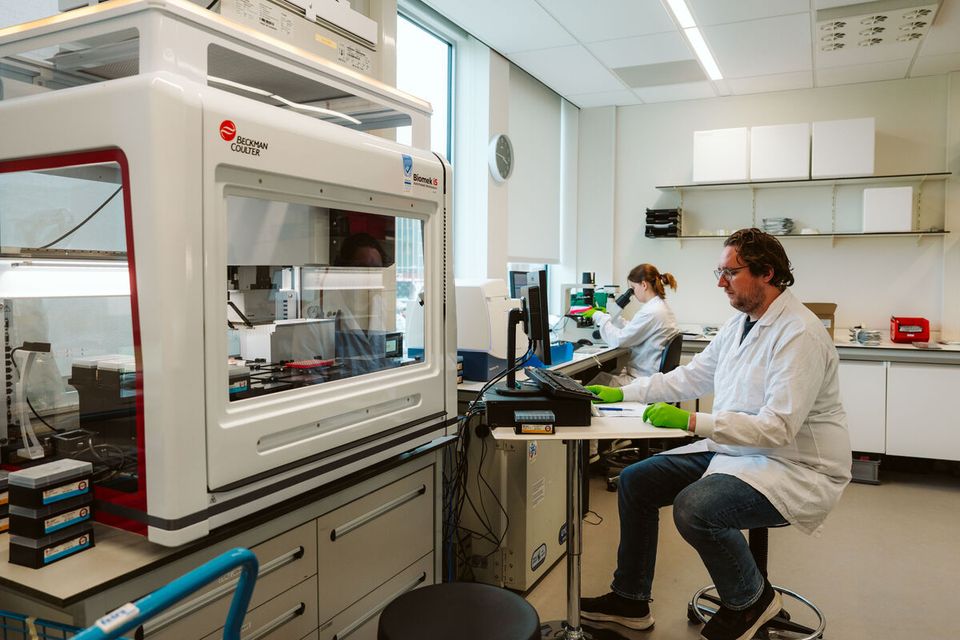
Using state-of-the-art equipment from the LUMC’s Flow Core Facility, the team analysed hundreds of thousands of immune cells from the biopsies. This revealed that, during an inflammatory response, some CD4 T-cells exhibit both pro-inflammatory and anti-inflammatory properties simultaneously. According to Van Unen, it is as if the immune system is “pressing two pedals at once: the brake and the accelerator”. The discovery shows that the immune response in chronic inflammatory bowel disease is more dynamic than previously thought and may help explain why inflammation persists over the long term.